How “Front Porch Ministry” Can Help Your Church Reach More People
If you’ve ever wondered why your church’s website, social media, or ads aren’t bringing new people through the doors—you’re not alone. Many churches are asking the same question: How do we actually reach people who aren’t already looking for us?
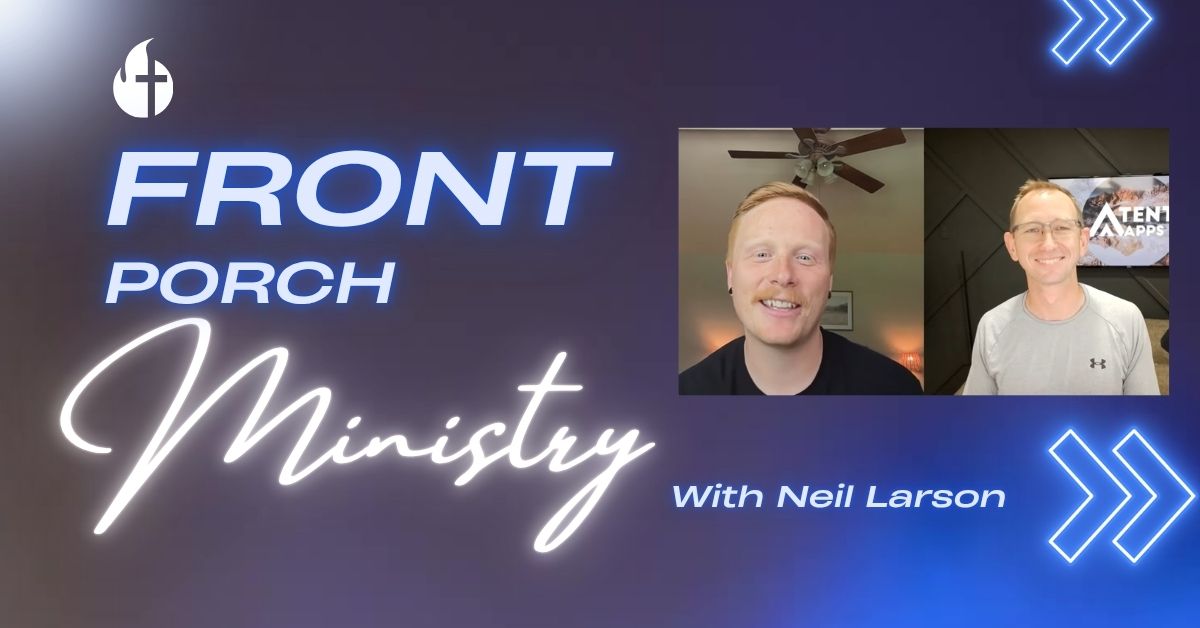
Front Porch Ministry
If you’ve ever wondered why your church’s website, social media, or ads aren’t bringing new people through the doors—you’re not alone. Many churches are asking the same question: How do we actually reach people who aren’t already looking for us?
In a recent conversation on the Smarter Church Communications podcast, Zack Esgar sat down with Neil Larson to unpack a radically different approach—one that looks less like traditional church outreach and more like missionary work.
Let’s break down what church leaders can learn from this.
Starting From Zero: Ministry Without a Built-In Audience
Neil’s journey began with a challenge: start a ministry from scratch in Austin, Texas—no student leaders, no Christian base, no existing relationships.
Instead of launching programs right away, they did something most churches skip:
- They prayed consistently
- They observed the community
- They learned before leading
Rather than assuming what people needed, they treated their city like missionaries would treat a new culture.
This required patience—something that can feel uncomfortable in a results-driven ministry culture. But that slow start revealed something important: real ministry begins with understanding people, not building programs.
What People Actually Need: Community Before Conversion
One of the biggest discoveries came in an unexpected place—a poetry class.
By simply participating as students, Neil and his team built relationships with people who were:
- Deeply lonely
- Spiritually curious
- But hesitant about anything labeled “church”
They realized something powerful:
People often want what the church offers—but not in the form the church typically presents it.
Instead of inviting people into a formal ministry, they focused on building genuine friendships and safe environments first.
This flipped the traditional model:
- Not “come to church, then find community”
- But “experience community, then explore faith”
The Big Shift: Creating “Front Porch” Spaces
One of the most practical ideas from this conversation is what Neil describes (inspired by Tim Keller) as “front porch ministry.”
Think of it like this:
- The church service is the living room
- But people need a front porch first—a place to observe, engage, and feel safe
Neil’s team created these kinds of spaces on campus:
1. Conversation Café
A casual setup with coffee and one thoughtful question:
- “What would your TED Talk be about?”
- “What’s something you wish people understood about you?”
No pressure. Just meaningful conversation.
2. Open, Public Bible Study
Held in a high-traffic area:
- People can join, leave, or just listen
- No expectation of commitment
- Fully visible and approachable
3. “Club of Clubs” Initiative
They helped students start interest-based groups:
- Chess
- Gaming
- Fitness
- Music
This wasn’t labeled as “ministry”—but it built community infrastructure, which naturally led to deeper conversations.
Why This Works (When Ads and Programs Don’t)
Traditional outreach often says:
“Come to us.”
Front porch ministry says:
“We’ll meet you where you already are.”
This approach works because:
- It removes barriers and pressure
- It addresses loneliness first
- It builds trust before truth conversations
- It allows people to belong before they believe
And perhaps most importantly—it reflects how Jesus ministered:
- Starting with the overlooked
- Being interruptible
- Meeting people in everyday life
What Churches Can Do Right Now
You don’t need a college campus to apply this.
Here are a few ways your church can start thinking like a missionary:
1. Create Low-Barrier Gathering Spaces
- Coffee meetups
- Hobby groups
- Community dinners
- Open discussions in public places
Focus on connection, not conversion (at first).
2. Be Present Where People Already Are
Instead of expecting people to come to you:
- Go to local events
- Partner with community spaces
- Show up consistently
3. Design for “Interruptibility”
Not everything needs to be polished and structured.
Leave room for:
- Drop-ins
- Questions
- Conversations that go off-script
4. Build Community Before Programming
Ask:
“Where are people already gathering—and how can we support that?”
Instead of launching something new, strengthen what already exists.
Final Thoughts: If Your Church Disappeared…
Zack shared a powerful question during the conversation:
If your church disappeared tomorrow, would your community notice?
That question gets to the heart of this entire approach.
Front porch ministry isn’t about better marketing—it’s about greater presence.
It’s about becoming a church that:
- Serves visibly
- Connects authentically
- Creates spaces people actually want to be in
Let’s Keep the Conversation Going
What would a “front porch” look like in your community?
- A weekly coffee hangout?
- A public Q&A space?
- A hobby-based group?
Whatever it is, the goal is simple: make it easy for people to take the first step.
If this sparked ideas for your church, share them—or reach out. The more we learn from each other, the more effective we can be at reaching people who aren’t walking through our doors… yet.

Zack Esgar
AuthorFounder & CEO, Tent Apps
Zack Esgar is the owner and founder of Tent Apps. He loves helping churches and ministries further reach their communities for the Gospel through digital marketing and smart ministry websites. Zack graduated from Texas Tech with a degree in Business and has served on staff at churches and ministries for the last 12 years.